The First Draft Does Not Need to Explain Everything
A first draft can preserve an idea without resolving it. Learn when to capture fragments, when to clarify them, and what to leave for revision.
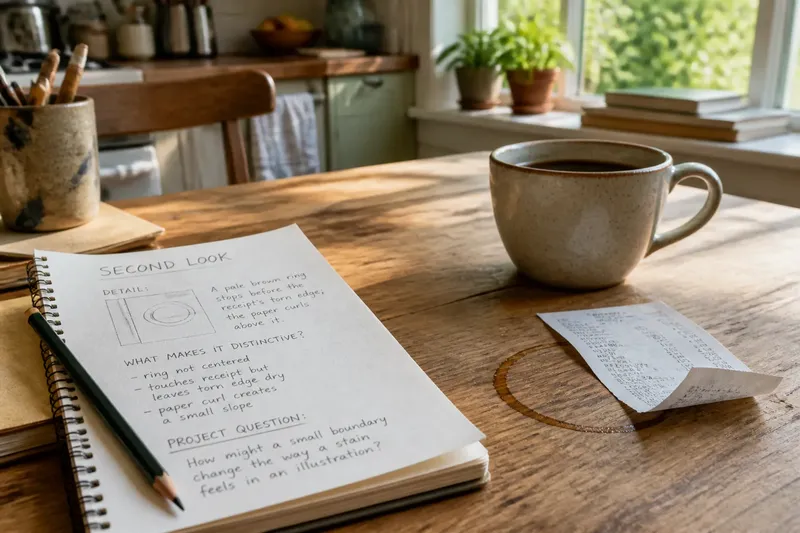
You jot “blue bowl, late bus, apology” on the back of a receipt, then stare at the words as if they owe you a plot. A first draft does not need to explain everything. Its first job is to keep the idea available; explanation can wait until you know what the idea is asking of you.
That distinction is easy to lose. Writers, designers, and other makers often try to capture an impulse and judge its usefulness in the same moment. The result is a small, anxious performance of completeness: context gets added, weak links are repaired, and the odd detail that made the idea interesting is quietly removed. A better process depends on your situation. Sometimes you need a fragment, sometimes a bridge, and sometimes a deliberate pause before polishing.
Capture a fragment when the idea is still arriving
If the thought is moving faster than you can organize it, record the pieces that seem alive. A few concrete nouns, an image, a line of dialogue, a question, or a contradiction may be enough. You are not promising that each item belongs in the final work. You are leaving yourself something more useful than a vague memory.
Use the tool that creates the least friction: a pocket notebook, a voice memo, a notes app, or a scrap of paper. Add a small marker if it helps distinguish the material from instructions to yourself. “Keep the green coat” or “voice sounds too formal” can guide later attention without turning the note into a miniature essay.
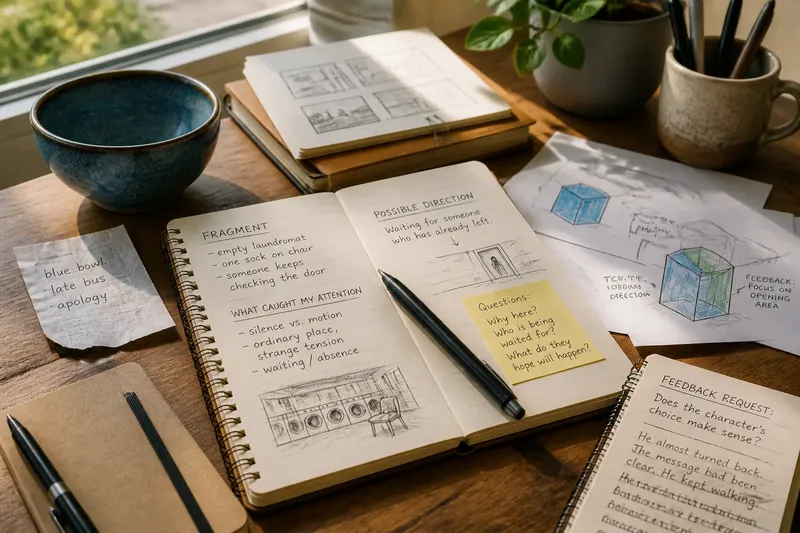
Say you are sketching an idea for a short scene and write, “empty laundromat; one sock on chair; someone keeps checking the door.” That note preserves a place, an object, and a source of tension. You might later decide the scene concerns a missed meeting, a theft, or nothing beyond the peculiar patience of waiting. The expected observable result of this capture is a record you can return to without having to invent the initial details again.
Choose fragments when you can still sense the idea but cannot yet say what connects its parts. Forcing a connection too soon is often less like clarification than filing a complaint against the material for being unfinished.
Add a bridge when you cannot tell what the fragments mean
A fragment can preserve an idea and still be difficult to read later. If you return to a page and find a string of details with no indication of why you saved them, add a brief bridge. It need not settle the meaning. A sentence such as “This may be about waiting for someone who has already left” offers a possible direction while leaving room to change your mind.
Keep observation separate from interpretation. “Rain on the ticket” describes a visible detail; “the trip has gone wrong” interprets it. Both may be useful, but mixing them without noticing can make an early guess feel like established fact. A simple note format helps:
- What is here: list the image, phrase, material, or action.
- What caught my attention: name the contrast, feeling, or oddity.
- Possible direction: write one tentative explanation, if one comes readily.
This is a working aid, not a form to complete every time. Use it when later-you needs a clue about why the material mattered. Skip it when the fragments are already vivid or when adding commentary would interrupt the act of noticing.
Clarify now when another person needs to act
An early draft can remain private and provisional. It cannot remain obscure if someone else must use it to make a decision. A collaborator may need to know which object is being changed, what question needs answering, or which part is uncertain. In that situation, clarify the practical request while leaving the creative idea open.
For instance, a designer sharing a rough packaging concept might label the drawing “test the opening direction” and mark the area that needs feedback. The sketch can stay loose, but the collaborator should not have to guess whether the requested response concerns the label, the shape, or the opening. Make the decision needed explicit; do not polish unrelated details to make the page look finished.
The same distinction applies when you are asking for feedback on writing. If a reader is meant to comment on whether a character’s choice makes sense, say so. They may otherwise spend their attention on commas or a sentence that will disappear in revision. Clarity about the task is not the same thing as clarity about every artistic choice.
Polish later when the form is still changing
Polishing an unstable draft can create expensive-looking attachment to material that has not earned its place. A carefully balanced paragraph, a refined color palette, or a neat page layout can make revision feel like loss. The work may then stay in its current shape because the effort invested in finishing it has become an argument for keeping it.
Delay finish work when you are still changing the order, scale, point of view, or purpose. Leave a bracketed note, use a rough sketch, or keep a phrase plain rather than tuning it. The aim is not to make everything sloppy. It is to spend attention on decisions that are likely to survive the next round of thinking.
There is a limit to useful roughness. If the form is stable and a small unresolved detail blocks a reader or collaborator, fix that detail. If you keep postponing a decision because the draft is “still early” despite knowing what it needs, the phrase has become a comfortable hiding place. Choose the smallest clarification that makes the next action possible.
Choose the right draft move for your situation?
What should I write down when I have only an image?
Record the image in concrete terms and add whatever made you stop: a texture, mismatch, movement, or feeling. Avoid inventing a full explanation unless one arrives naturally; an image can remain useful before it has a story attached.
Should I explain my idea before I share it?
Explain what a reader or collaborator needs in order to respond, such as the question being considered or the part that is uncertain. Leave the underlying idea provisional if you are still discovering its direction.
How do I know when a rough draft needs more clarity?
Ask whether you can identify the next useful action without guessing what your own notes mean. If you cannot, add a bridge sentence, label, or question rather than polishing the whole piece.
What if I keep adding notes instead of making a decision?
Pause capture and name the decision that is actually pending. Choose a small, reversible move, such as selecting one version to develop for the next pass, then notice what that choice makes easier to see.
Keep the record separate from the verdict
One useful habit is to make the saved material and the current judgment visibly different. A heading like “raw notes” can sit beside “possible direction” or “next question.” In a sketchbook, use a margin; in a digital note, add a short label. This prevents a tentative interpretation from masquerading as the original observation when you revisit the page.
Do not build an elaborate filing system for a handful of ideas. A folder called “early drafts” and a search term you actually remember may be enough. The administrative theater of tags, color codes, and nested categories is not worth the effort if it delays getting the thought down or makes retrieval harder.
When a draft feels unclear, decide what kind of unclear it is. If the idea is still arriving, capture the live pieces. If you cannot recover why they matter, add a bridge. If someone needs to respond, state the request. If the work’s shape is still shifting, delay finish work. The first draft does not need to explain everything, but it should preserve enough for the next useful decision—and the main phrase, first draft, earns its keep when it names that boundary rather than demanding a polished answer too soon.